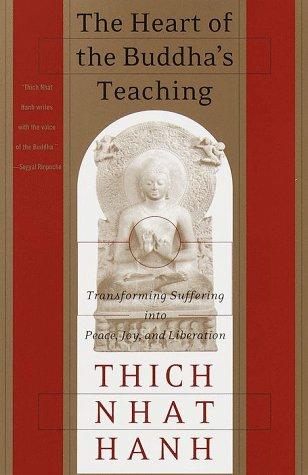
Buddhism is often introduced through meditation — sit, breathe, notice the mind. That's a real and central part of the practice, but it sits on top of a body of teaching about the nature of suffering, self, and reality that's worth understanding on its own terms. Here's where Buddhism came from, what it actually teaches, and how its major schools diverge.
Where it started
Buddhism traces back to Siddhartha Gautama, a prince born in what is now Nepal around the 5th or 6th century BCE. According to tradition, he left a life of privilege after encountering old age, sickness, and death for the first time, and spent years as a wandering ascetic searching for a way to end suffering. After a period of meditation under a fig tree — the Bodhi tree — he reached a realization about the nature of suffering and its causes, and became “the Buddha,” meaning “the awakened one.” He spent the rest of his life teaching what he'd realized, and those teachings were passed down orally before eventually being written down as the sutras.
The Four Noble Truths
The core of the Buddha's teaching is usually summarized as four statements, traditionally presented in the structure of a medical diagnosis: identify the illness, its cause, whether it can be cured, and the treatment.
- Dukkha — life involves suffering. Not just acute pain, but a pervasive unsatisfactoriness: even pleasant experiences are temporary and tinged with the anxiety of losing them.
- Samudaya — suffering has a cause. Craving and attachment — wanting things to be other than they are, clinging to what's pleasant and pushing away what isn't.
- Nirodha — suffering can end. Because it has a cause, it isn't a fixed feature of existence. Removing the craving removes the suffering it produces.
- Magga — there is a path to end it. A concrete, practical route: the Eightfold Path.
The Eightfold Path
The path is traditionally grouped into three areas — wisdom, ethical conduct, and mental discipline — rather than eight sequential steps:
- Wisdom: right view, right intention
- Ethical conduct: right speech, right action, right livelihood
- Mental discipline: right effort, right mindfulness, right concentration
“Right” here doesn't mean a moral rulebook so much as skillful — action, speech, and thought that reduce suffering for yourself and others, rather than a fixed commandment to follow.
Other core concepts
- Anicca (impermanence). Everything conditioned — thoughts, feelings, relationships, the body — is in constant flux. Clinging to permanence where none exists is a major source of suffering.
- Anatta (non-self). One of Buddhism's more distinctive claims: there is no fixed, unchanging self underlying experience — what we call “self” is a changing process, not a static thing.
- Karma and rebirth. Intentional actions have consequences that shape future experience, traditionally understood across multiple lifetimes, though some modern, secular interpretations focus on karma as a psychological pattern within a single life rather than a literal cycle of rebirth.
- Nirvana. The cessation of suffering and the craving that causes it — not a place, but the end of the process described in the Four Noble Truths.
The major schools
Buddhism split into distinct traditions over the centuries as it spread across Asia, differing in scripture, practice, and emphasis:
- Theravada (“Teaching of the Elders”). The oldest surviving school, dominant in Sri Lanka and Southeast Asia. Emphasizes the Pali Canon, individual liberation through monastic discipline and insight meditation, and a relatively literal reading of the earliest recorded teachings.
- Mahayana (“Great Vehicle”). Dominant in China, Japan, Korea, and Vietnam, and the source of well-known traditions like Zen and Pure Land Buddhism. Introduces the ideal of the bodhisattva — someone who delays their own final liberation to help all beings reach it — and a wider body of later scriptures.
- Vajrayana (“Diamond Vehicle”). Dominant in Tibet and the Himalayan region, sometimes considered a branch of Mahayana. Adds tantric practices, elaborate ritual, visualization, and mantra as accelerated routes to the same liberation Theravada and Mahayana describe.
The differences are real, but the Four Noble Truths, the Eightfold Path, and concepts like impermanence and non-self are shared ground across all three — the schools diverge more in method and scripture than in the basic diagnosis of suffering and its cause.
How this connects to meditation
Meditation practices like mindfulness, Vipassana, and Metta — covered in more depth in our guide to Buddhist meditation — aren't a separate wellness add-on to this framework; they're the mental discipline piece of the Eightfold Path, the practical method for directly observing impermanence and non-self rather than just accepting them as ideas.